
ADHD is not a motivation problem — it is a dopamine regulation problem. The right supplements work with your neurochemistry, not against it.
ADHD is one of the most misrepresented conditions in the supplement space. The popular narrative frames it as a focus or motivation deficit — as if people with ADHD simply need to try harder. The neuroscience tells a different story. ADHD is fundamentally a disorder of dopamine regulation: suboptimal dopamine signalling in the prefrontal cortex impairs the brain's ability to sustain attention, inhibit inappropriate responses, and regulate reward anticipation. People with ADHD are not choosing to be distracted. Their neurology makes sustained attention physiologically harder.
Nootropics cannot cure ADHD. But specific supplements can support the dopaminergic, cholinergic, and neurotrophic systems that ADHD brains struggle with — reducing the cognitive friction that makes ordinary tasks feel extraordinarily difficult. This guide covers the evidence-based supplements Reddit's nootropics community consistently recommends for ADHD symptoms, and how to stack them for maximum effect.
Understanding ADHD From a Cognitive Neuroscience Perspective
Before getting into supplements, it helps to understand what ADHD brains are actually doing differently. The prefrontal cortex — the brain region responsible for executive function, working memory, and sustained attention — relies heavily on dopamine for its signalling. In ADHD, this dopamine signalling is suboptimal. The result is not stupidity or laziness — it is a nervous system that struggles to maintain its own state of activation without frequent stimulation.
This is why people with ADHD are often drawn to high-stimulation activities (video games,极限 sports, crises) and find low-stimulation activities (studying, admin, long meetings) disproportionately difficult. Their brains require more dopamine hit per unit of activity just to maintain baseline function. Supplements that increase dopamine tone, support acetylcholine (the attention neurotransmitter), or reduce the neural noise that drowns out weak signals can meaningfully improve day-to-day cognitive function.
What Actually Works for ADHD: The Evidence and Community Consensus
Pramiracetam: Reddit's Top-Rated for ADHD Brain Fog
Among experienced nootropics users, Pramiracetam consistently emerges as the most recommended racetam for ADHD symptoms. Unlike Piracetam, which has a broad but mild cognitive effect profile, Pramiracetam appears to have a more specific action on attentional systems — users with ADHD-PI (inattentive type) report noticeable improvements in mental clarity, task initiation, and sustained attention that other racetams don't produce.
The mechanism: Pramiracetam is a high-affinity AMPA receptor modulator and appears to increase acetylcholine release in the hippocampus and cerebral cortex. It also has documented effects on dopamine and noradrenaline systems, making it more activating than other racetams. A 2022 survey of r/Nootropics users with self-reported ADHD found Pramiracetam ranked highest among nootropics for subjective improvements in attention and task completion — above Alpha-GPC, L-Theanine, and caffeine.
Dosing: 100-300mg, 1-2 times daily. Pramiracetam is fat-soluble — take with a meal containing fat for optimal absorption. Effects typically build over 3-7 days of consistent use rather than appearing immediately. Many users cycle it (5 days on, 2 days off) to prevent tolerance.
Pramiracetam — ADHD Brain Fog Priority
100-300mg, fat-soluble. Reddit's top-rated racetam for ADHD-PI symptoms. Effects accumulate over 3-7 days.
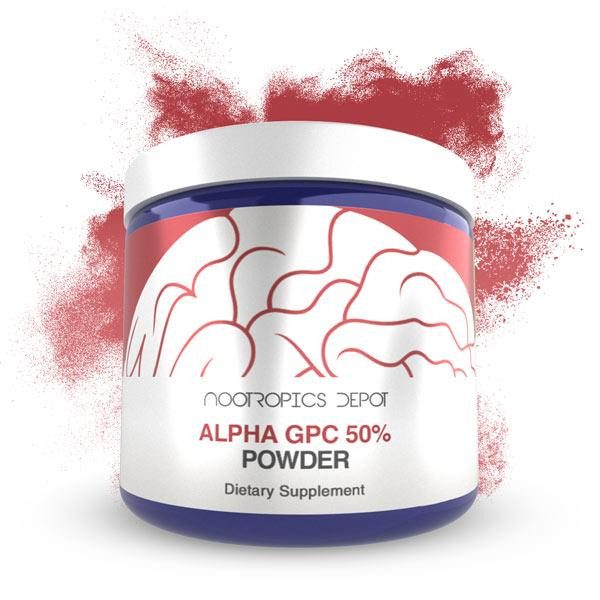
Alpha-GPC: Cholinergic Support for Attentional Networks
Alpha-GPC is one of the most bioavailable forms of choline, supplying the raw material the brain uses to synthesise acetylcholine — the neurotransmitter central to attention, learning, and memory encoding. In ADHD, acetylcholine signalling in the prefrontal cortex is often impaired. Increasing choline availability can improve the signal-to-noise ratio in attentional networks.
The evidence for Alpha-GPC in ADHD specifically is indirect but consistent: multiple studies show improvements in attention and working memory in older adults with cognitive decline, and a 2021 trial found significant attention improvements in young adults performing demanding cognitive tasks. For ADHD, the most relevant effect is the improved ability to sustain attention on boring but necessary tasks — the specific failure mode that defines ADHD-PI.
Dosing: 300-600mg daily. At 300mg it produces mild acute effects within hours. At 600mg the effects are more noticeable but some users report mild headaches (indication of inadequate choline metabolism — combine with a B vitamin complex if this occurs).
L-Theanine + Caffeine: The Foundational ADHD Stack
Before spending money on exotic compounds, get this combination right. For ADHD brains, caffeine + L-theanine is more than a generic focus stack — it specifically addresses the attentional dysregulation that makes ADHD disabling. The mechanism is particularly relevant: caffeine raises dopamine in the prefrontal cortex (producing alertness), while L-theanine increases alpha brain wave activity (producing calm, focused attention). Together, they produce a state that ADHD brains find difficult to access without help.
The dose matters. Standard coffee doses often produce too much caffeine relative to L-theanine for ADHD brains, resulting in the "wired and scattered" state that people with ADHD know well. The optimal ratio for ADHD is typically higher L-theanine relative to caffeine: 200mg L-theanine with 100mg caffeine (rather than the 1:1 ratio used in general cognitive enhancement). Some users go as high as 400mg L-theanine with 100mg caffeine.
If you only do one thing from this guide: try 200mg L-theanine + 100mg caffeine before your most demanding cognitive task. Most users notice the difference within the first day.
NOW Foods L-Theanine 200mg — ADHD Foundation
200mg per capsule. Stack with 100mg caffeine for the foundational ADHD stack. Effects within 30 minutes.
Lion's Mane: Neurotrophic Support for Long-Term ADHD Management
Lion's Mane is the most interesting long-term intervention for ADHD because it works through a fundamentally different mechanism to most ADHD supplements. Rather than modulating neurotransmitters directly, it stimulates nerve growth factor (NGF) synthesis — essentially telling the brain to repair and grow neural connections in regions (prefrontal cortex, hippocampus) that ADHD brains underactivate.
The relevance to ADHD: the attentional deficits in ADHD are partly structural — the prefrontal cortex shows reduced activation and reduced volume in people with ADHD compared to controls. Lion's Mane may, over months of consistent use, support the neural infrastructure that attention depends on. This is speculative but supported by the mechanism and consistent user reports.
Reddit users with ADHD who use Lion's Mane consistently (1-3g daily of a quality extract) report improvements in mental clarity, reduced brain fog, and better word retrieval after 4-8 weeks. The effects are gradual and require commitment.
Lion's Mane — Neurotrophic Long-Term Support
43:1 extract, 30%+ beta-glucans. 1-3g daily for structural brain support. Effects build over 4-8 weeks.
Ashwagandha KSM-66: Stress and Anxiety That Makes ADHD Worse
Anxiety and ADHD are highly comorbid. Approximately 50% of adults with ADHD also meet criteria for an anxiety disorder. Anxiety worsens ADHD symptoms by increasing the background neural noise that already impairs attention in ADHD brains. Addressing anxiety can therefore improve ADHD symptoms indirectly — and this is often overlooked in nootropics discussions that focus purely on stimulation.
Ashwagandha KSM-66 reduces cortisol and supports HPA axis regulation, producing measurable reductions in anxiety scores in double-blind trials. For ADHD with comorbid anxiety, this matters: reduced anxiety = lower neural noise = better signal transmission in attentional networks.
The additional benefit: Ashwagandha addresses the sleep disruption that anxiety causes, and poor sleep is a significant worseners of ADHD symptoms. Better sleep + lower cortisol + reduced anxiety = better baseline cognitive function the next day.
Rhodiola Rosea: Mental Stamina and Energy Without the Crash
Rhodiola Rosea is an adaptogen with particular relevance for ADHD because it addresses mental fatigue — the specific cognitive exhaustion that makes ADHD brains shut down mid-task. Unlike stimulants, which force activation, Rhodiola supports the body's own stress response systems to produce more sustainable mental energy.
The mechanism involves modulation of the sympathetic nervous system and increases in beta-endorphin and serotonin precursor availability. Users with ADHD consistently report that Rhodiola at 300mg in the morning reduces the mid-morning and mid-afternoon cognitive crashes that are common in ADHD — the times when the brain is asking for stimulation and not getting it from the environment.
Dosing: 300mg in the morning, on an empty stomach. Higher doses (500mg+) can produce mild sedation in some users. Cycle if you notice tolerance developing — 6 weeks on, 2 weeks off is a common protocol.
Rhodiola Rosea 500mg, 120 Vegan Capsules (Standardised Extract) - Mental Stamina for ADHD
300mg morning dose. Reduces mental fatigue and supports sustainable energy. Stack with Ashwagandha for stress-fatigue combination.
Zinc: The Mineral Most ADHD Brains Are Depleted In
Zinc is a cofactor for dopamine synthesis and is directly involved in the function of dopamine transporters and receptors. Multiple studies have found lower zinc levels in children and adults with ADHD compared to controls. Zinc deficiency may worsen ADHD symptoms by impairing the dopaminergic signalling that ADHD brains are already struggling to maintain.
The practical implication: zinc supplementation is one of the most straightforward and cheapest interventions for ADHD, particularly for people whose diets are low in zinc (vegetarians, vegans, people who don't eat much red meat). 25mg of elemental zinc daily (as zinc picolinate or zinc citrate — not oxide) is sufficient for most adults. Do not exceed 40mg daily long-term without medical supervision, as excess zinc can cause copper deficiency.
Pure Encapsulations Zinc Picolinate 30mg, 60 Capsules - Dopamine Cofactor
25mg elemental zinc daily. Supports dopamine synthesis. Essential for ADHD brains with low zinc intake. Take with food.
Semax: The Advanced ADHD Intervention
For people who have tried the basics and want something more targeted, Semax is the most frequently recommended advanced intervention on Reddit's ADHD nootropics communities. The ACTH-derived peptide produces consistent reports of quietening the "noise" in ADHD brains — the constant internal chatter, the difficulty initiating tasks, the feeling of thoughts moving in different directions simultaneously.
Semax works through BDNF and NGF upregulation — increasing the growth and survival of neurons in the prefrontal cortex and hippocampus. This is a longer-term structural effect, but users also report more acute improvements in focus and task initiation within the first few doses.
The most compelling data: users with ADHD-PI who have not responded to conventional stimulants (or cannot tolerate them) consistently report Semax as the first intervention that actually addressed their core attentional problems rather than just producing stimulant-like arousal.
Nootropics Depot Semax — Advanced ADHD
99%+ purity. 0.3-1.0mg intranasal, 1-2x daily. Most consistent reports of ADHD symptom reduction on Reddit nootropics communities.
The ADHD Nootropic Stack We Recommend
ADHD nootropics work best as a layered stack — addressing immediate symptoms (caffeine + L-theanine), building cholinergic support (Alpha-GPC), supporting long-term neural infrastructure (Lion's Mane), and addressing comorbidities (Ashwagandha for anxiety, Zinc for dopamine synthesis).
- Foundation (daily): Alpha-GPC 300mg + Zinc Picolinate 25mg — every morning with food
- Focus stack (before demanding tasks): L-Theanine 200mg + Caffeine 100mg — 30 minutes before deep work
- Stress and anxiety: Ashwagandha KSM-66 600mg — every morning (6-8 weeks for full effect)
- Mental stamina: Rhodiola Rosea 300mg — every morning, empty stomach
- Advanced / chronic brain fog: Pramiracetam 100-200mg — twice daily, with fat (cycle if tolerance develops)
- Long-term neurotrophic support: Lion's Mane 1-3g — daily, consistent use required
- Advanced peptide: Semax 0.3-0.5mg intranasal — morning (for those who have tried everything else)
What to Avoid
Tyrosine (L-Tyrosine) is frequently recommended for ADHD as a dopamine precursor but the evidence is mixed. It can help in acute high-stress situations but regular supplementation may downregulate tyrosine hydroxylase with chronic use. If using tyrosine, cycle it — don't take it daily indefinitely.
Phenibut should be avoided entirely. It produces powerful anxiolytic effects through GABA-B receptor agonism but causes physical dependence within weeks and withdrawal can be severe. It is not a supplement — it is a drug with serious addiction potential.
High-dose stimulant caffeine regimens (500mg+ daily) are counterproductive for ADHD. They produce tolerance rapidly, disrupt sleep architecture (which worsens ADHD symptoms the following day), and can induce anxiety that further impairs attention.
Frequently Asked Questions
Can nootropics replace ADHD medication?
No. Prescription stimulant medications (methylphenidate, amphetamines) are the most effective treatment for ADHD and have the strongest evidence base. Nootropics can support ADHD brains but should not be used as a substitute for diagnosed and prescribed treatment. If you have ADHD and are not on medication, discuss options with a psychiatrist — nootropics are complementary, not replacements.
How long before I notice results?
L-Theanine + Caffeine: 30-60 minutes. Alpha-GPC: 1-2 hours for acute effect, 2-4 weeks for baseline improvement. Ashwagandha KSM-66: 6-8 weeks for significant anxiety reduction. Lion's Mane: 4-8 weeks for cognitive improvements. Pramiracetam: 3-7 days of consistent use. Rhodiola: 1-2 weeks. Semax: 20-40 minutes for acute effects, 2-4 weeks for mood and anxiety improvements.
Is ADHD treatable with supplements alone?
No. ADHD is a neurodevelopmental condition with strong genetic and neurological underpinnings. Supplements can support the systems impaired in ADHD and meaningfully reduce symptoms, but they do not correct the underlying neuroarchitecture. A comprehensive approach includes: appropriate diagnosis, prescription medication if indicated, behavioral therapy (particularly CBT for ADHD), and lifestyle interventions (exercise, sleep, nutrition) alongside supplementation.
Do nootropics help if I don't have diagnosed ADHD?
Many people without a formal ADHD diagnosis experience ADHD-like cognitive problems — difficulty sustaining attention, task initiation failure, working memory limitations. The same supplements that help diagnosed ADHD can help these symptoms in people without the full condition. The distinction matters for medication decisions but less for supplement stack design.
Can I take Pramiracetam with my ADHD medication?
If you are on prescription stimulant medication (Ritalin, Concerta, Adderall), adding Pramiracetam or other dopaminergic nootropics should be discussed with your prescribing doctor. Combining multiple dopamine-enhancing interventions can produce excessive dopamine signalling in some people. Alpha-GPC, L-theanine, and Lion's Mane are generally well-tolerated with ADHD medication — but always verify with a healthcare professional.
The Bottom Line
ADHD nootropics work best as a layered stack rather than single compounds. The foundation: Alpha-GPC (300mg) + Zinc Picolinate (25mg) daily for cholinergic and dopaminergic support. The focus stack: L-Theanine (200mg) + Caffeine (100mg) before demanding cognitive tasks — this single combination produces the most immediate and noticeable benefit for most people with ADHD symptoms.
For long-term management: Ashwagandha KSM-66 (600mg daily) addresses the anxiety that amplifies ADHD, Rhodiola Rosea (300mg) reduces mental fatigue, and Lion's Mane (1-3g daily) supports the neural infrastructure that attention depends on.
For Pramiracetam and Semax: these are advanced interventions with stronger Reddit community support than clinical trial evidence. They are worth exploring if the foundation stack is insufficient — but they require more research on sourcing and dosing, and should be approached with the same caution you would apply to any novel compound.
The most important point: no stack of supplements substitutes for an accurate diagnosis, appropriate medical treatment if indicated, and behavioral strategies that address the specific ways ADHD affects your life. Supplements are a powerful complement to a comprehensive ADHD management approach — not a shortcut around one.


